

The Evolution of Saree Embroidery: From Traditional Zari to Modern Sequins

The embroidery of sarees has existed as a living art form reflecting Indian cultural progress. The embroidery saree has made its way through the ages, from temple sculptures to celebrity red carpets and from religious to secular settings; an influential yet evolving attire. What was once sacred, woven by hand using gold thread, is now a contemporary, sequin saree with delicate patterns. A saree today is an embroidery material that is an engagement of tradition and innovation, timeless beauty with modern application.
The Evolution of Saree Embroidery:
Origin of sarees:
To understand the evolution of the saree itself, one must first explore its earliest roots. The saree, which is one of the oldest garments in the world, is over 5,000 years old. Ancient sculptures, terracotta figurines, and Vedic texts display women draped in unstitched fabric, embellished with borders and patterns. Although the embroidery was initially done by hand with simple threads, in time, it became a mark for both wealth and refinement.
As urbanisation continued to grow and civilisations developed, the ornamental saree embroidery became more elaborate. Textile artisans started incorporating cotton, silk, and metallic yarns to create intricate embroidered borders and patterns that represented local flora, fauna, and mythology. The embroidery saree designs became much more than an adornment; they became a way of storytelling through your attire.
The rise of zari embroidery:
Zari has proven to be the oldest and most foundational of all techniques that contributed to the evolution of saree embroidery. Zari embroidery, derived from Persia and furthered in India during the Mughal period, incorporates the use of fine gold or silver thread interwoven within silk or brocade. Every stitch offers a luxurious impression, and forbidden to the ordinary user, zari sarees are often regarded as synonymous with royal wear and divine grace.
Zardozi was a heavier version of zari, often used for more intensely embroidered sarees, as well as for palace cushions and decor items. Zardozi embroidery would often take weeks or months to complete. Zari embroidery saree design remains a hallmark of luxury even today and is commonly used in bridal and ceremonial sarees.
Regional diversity in saree embroidery:
As the saree transported itself from region to region, embroidery techniques adapted and
evolved with local culture. In Bengal, folk tales were told through stitching layers of threads in kantha stitches. In Gujarat, the mirror work created a sparkling effect of glittering festivities. In Lucknow, chikankari represented pure white as a delicate subtlety, while the Kutch Technique was identified with tribal embroidery using brilliant, colourful threads for its embroidery saree designs.
Each type of saree embroidery became an identifier for all people, their technique, palettes, and themes. Together, these styles became a diverse fabric of Indian garments and textile history, from which many techniques still continue to hold relevance in contemporary fashion.
The shift to sequin sarees:
The 20th century represented a turning point in the evolution of saree embroidery. As mechanisation gained a foothold, artisans began to adapt hand techniques to accommodate mass production. Although machine embroidery amused some for its speed, consistency, and affordability, thereby making it possible for more women to own embroidered sarees, many people who preferred handwoven sarees worried that all would not go as planned, and that this emergence of machine embroidery would be the end of the fine craft.
On the other hand, the development coincided with saree embroidery being accessible more widely. Furthermore, this offered greater flexibility and ultimately sourced new material in the form of fusion, sequence work sarees. Combinations of zari, threadwork and beads were used, showing that the nature of sarees was evolving and being made from lighter materials like georgette and chiffon. Net embroidery sarees also gained a lot of popularity during this period.
Dominance of the sequin saree:
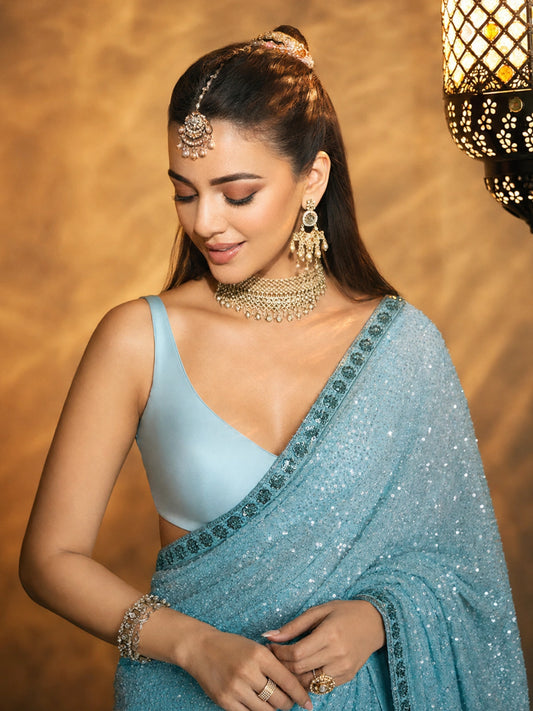
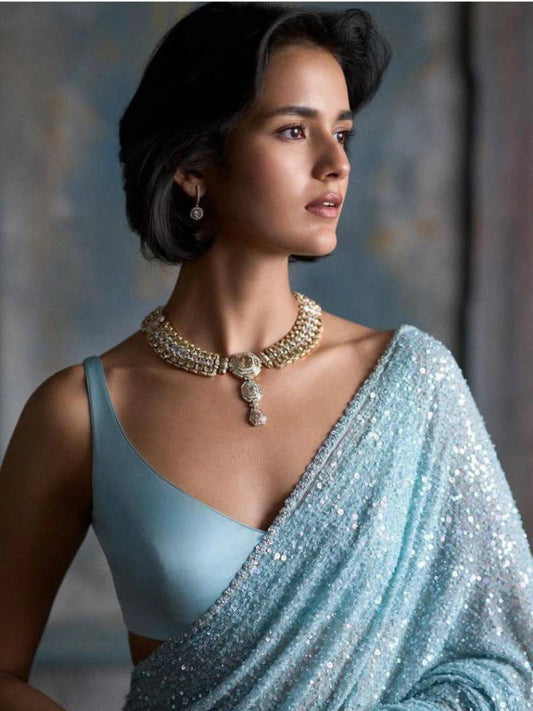
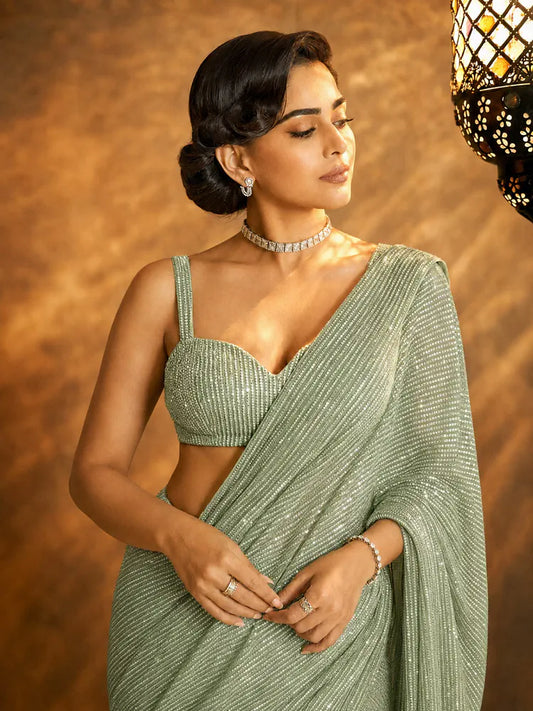
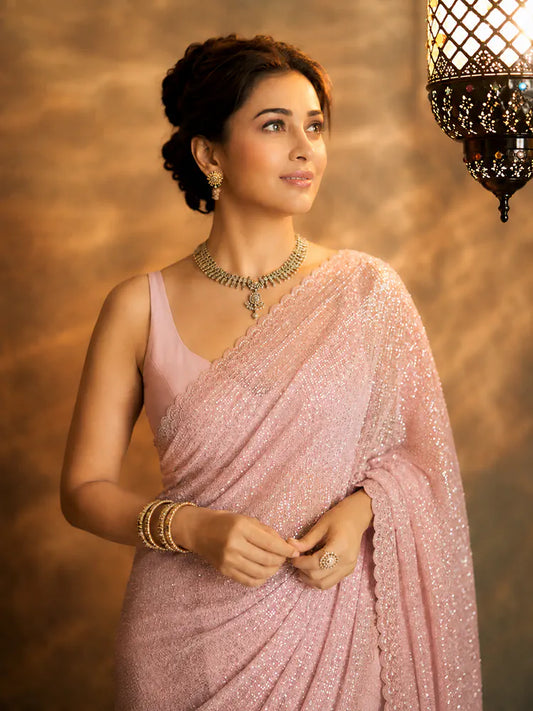
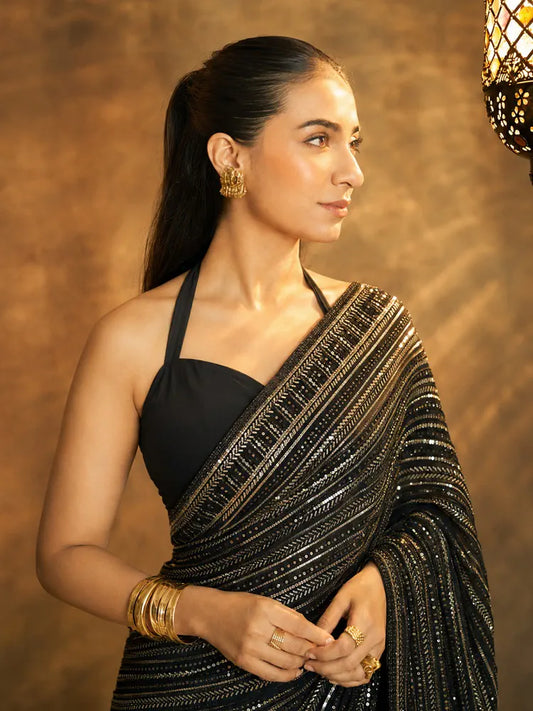
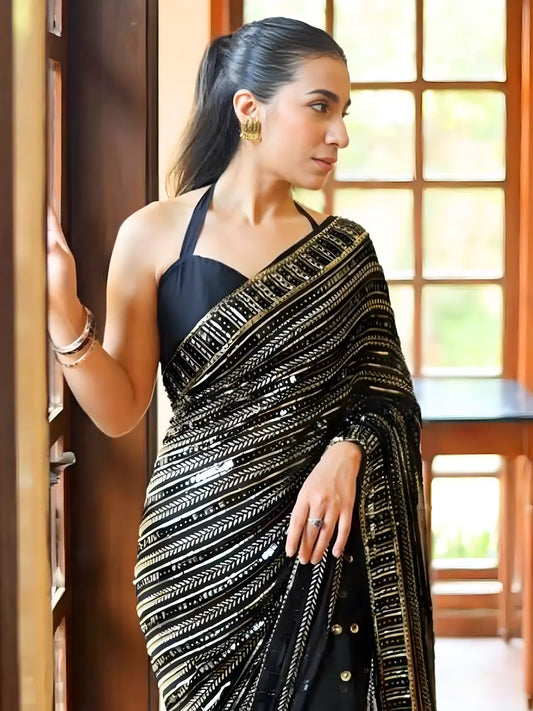
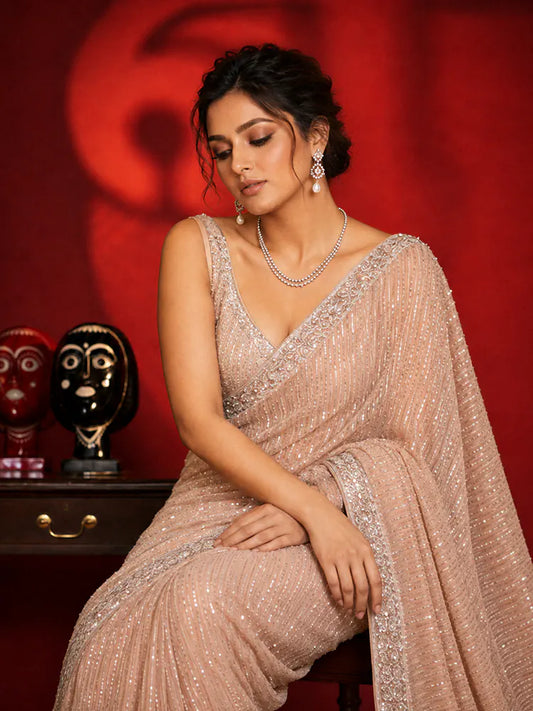
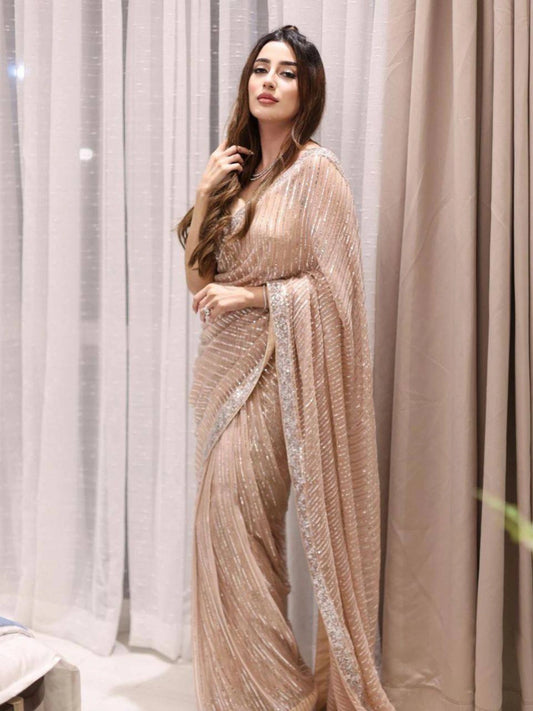
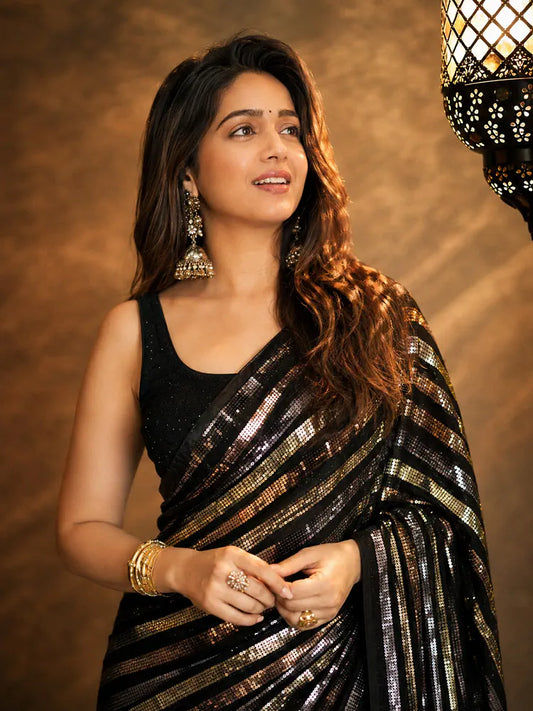
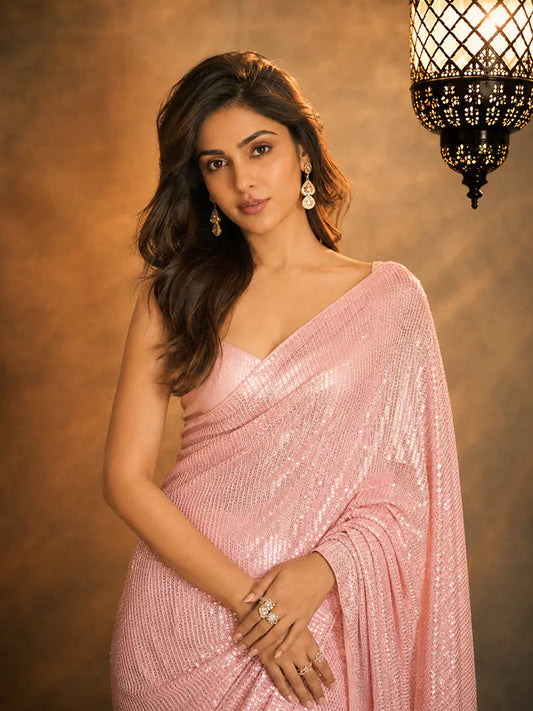
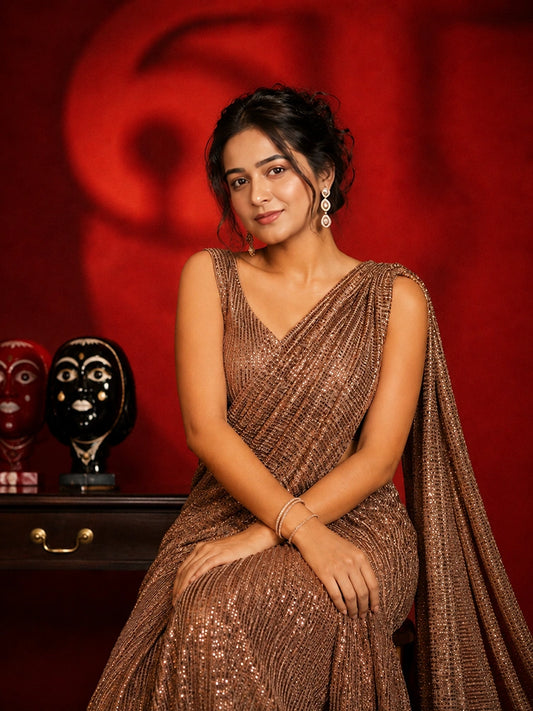
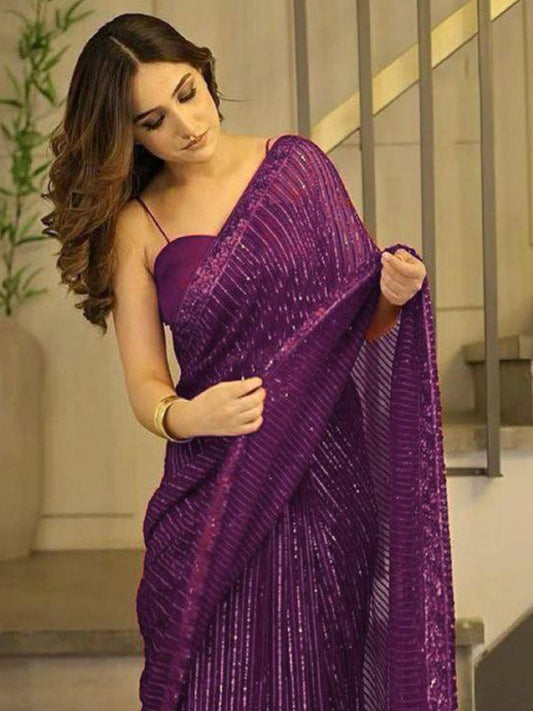
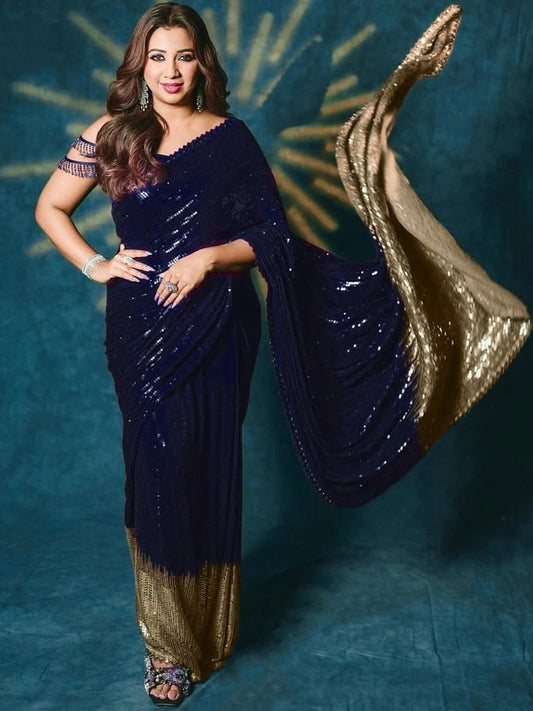
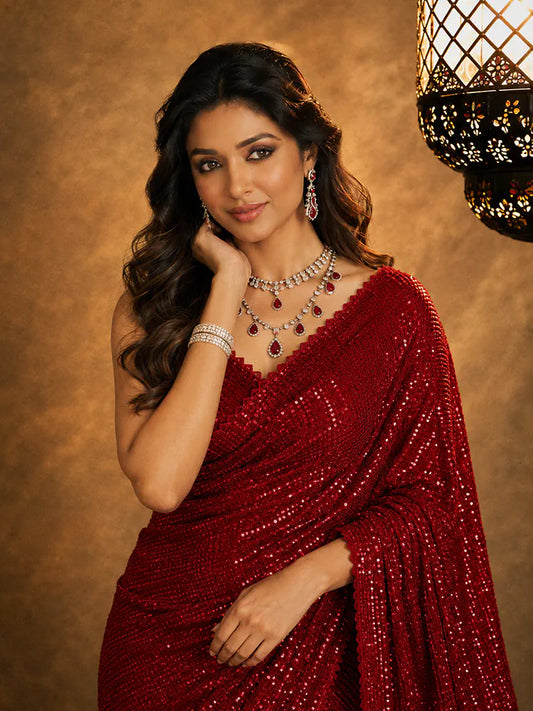
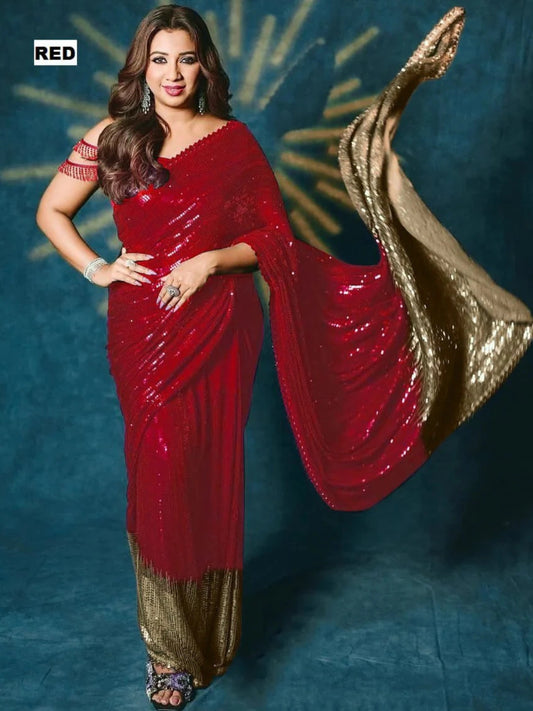
The next major leap came along with the sequins saree: tiny reflective disks that could be sewn onto a saree in patterns that twinkled in the light. The history of sequin saree embroidery can be traced back to ancient Egyptian times, where they would sew metal coins to their clothing for prosperity. The Sequence-work sarees did not rise to fame until the periods of the 1980s and 1990s, when Bollywood glam sequin sarees began to make headlines.
Designers of that time period would either work in plastic or metallic sequins to have weightless sarees, designed to flaunt their look at all sorts of grand occasions, especially weddings. Now, the sequin sarees are hot new categories of style and are now synonymous with celebration: elegant, reserved, and yet striking, layering the tools of being traditional and modern at the same time.
At Celebrity Drapes, sequin sarees are a part of our very design. Each sequence work saree has red-carpet confidence, with heritage embroidery combined with a whole lot of modern dazzle. From best to minimal, all the way up to fully embellished drapes, every piece reflects light.
Net embroidery sarees: a fusion of traditional and modern
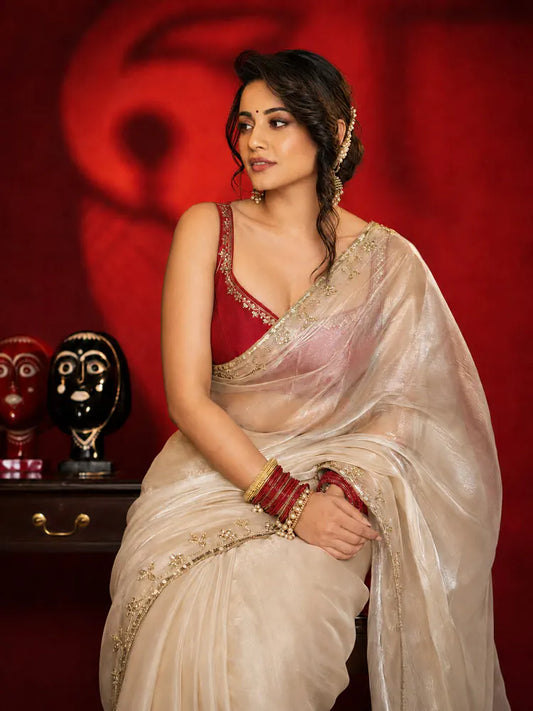
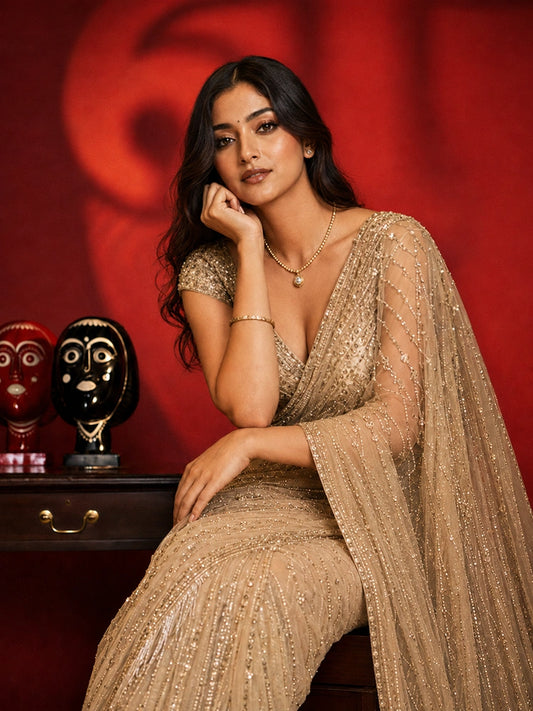
Saree embroidery trends of today heavily include net embroidery sarees that essentially are the best of both worlds: the centuries-old craft of zari and modern materials and digital design. Artisans and designers are utilising gradient colours, laser cut designs and sustainable thread. They continue with the handcrafted feel of South Asian pieces.
Celebrity Drapes is among the many brands of darling sarees that elevate the look of luxe and achieve a wearable aesthetic to drape. Celebrity Drapes combine couture quality and value, demonstrating their commitment to keeping the essence of Indian embroidery saree designs alive in the modern, global, contemporary view of fashion.
Current trends in saree embroidery:
By 2025, the embroidery trend has leaned towards modern minimalism; women want crisp motifs and a hint of sheen, making lightweight organza and net fabrics dominate the landscape. Designers opted for spaced-out sequins and threads, rather than heavy zari for evening or festive wear. Sequence-work sarees are, however, the most popular saree type, as they create the ideal reflection of light for photos. 3D floral embroidery, metallic threads, and tonal sequence work continue to make an impact, adding less ornamentation but high-impact appeal.
Final Thoughts: Celebrating The Art Of Saree Embroidery Throughout The Years
Celebrity Drapes have come to represent sophisticated modern Indian elegance. By utilising traditional embroidered elements and modern design, the brand is continuously rewriting how women interpret luxury. The collections feature embroidery saree designs that incorporate zari, sequins, and net, each of which conveys pure confidence and sophistication.
Each saree embroidery is made not based on how it looks, but rather how it makes the woman who is wearing it feel. Celebrity Drapes sets out to prove that embroidery designs, even hundreds of years old, can still be as relevant and inspirational as they ever have.
Related Products
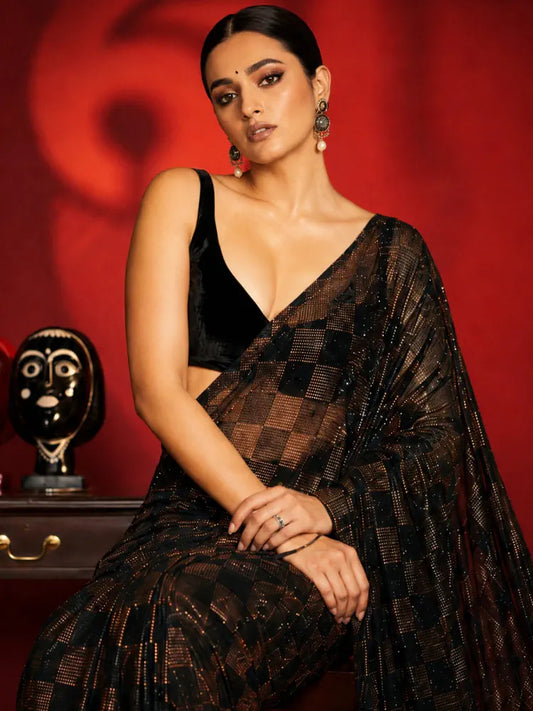

- ₹3,599
- ₹3,599
₹5,998.33- Unit price
- per
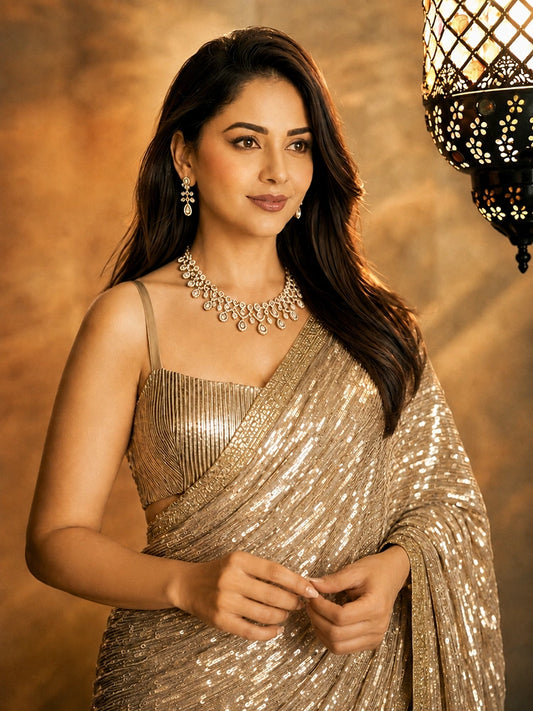

- ₹4,349
- ₹4,349
₹8,698- Unit price
- per
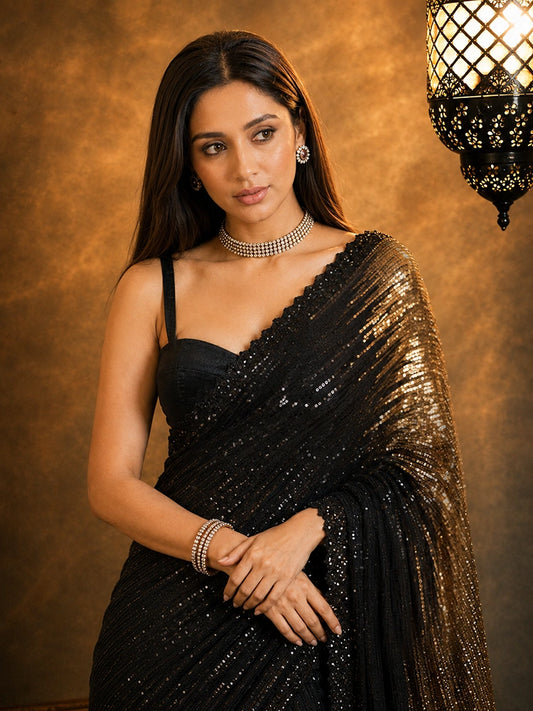

- ₹4,049
- ₹4,049
₹5,784.29- Unit price
- per
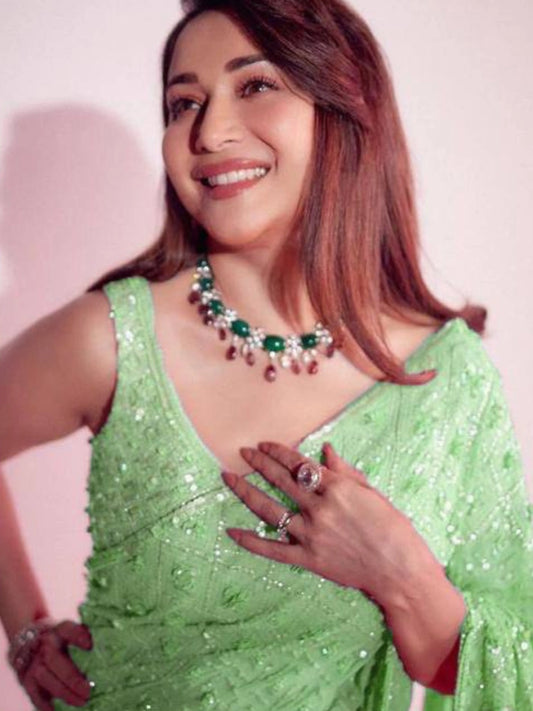

- ₹3,499
- ₹3,499
₹6,998- Unit price
- per
- ₹4,599
- ₹4,599
₹7,075.38- Unit price
- per

- ₹4,599
- ₹4,599
₹9,198- Unit price
- per

- ₹4,599
- ₹4,599
₹7,665- Unit price
- per
- ₹4,049
- ₹4,049
₹6,748.33- Unit price
- per
- ₹4,049
- ₹4,049
₹6,229.23- Unit price
- per

- ₹5,499
- ₹5,499
₹7,855.71- Unit price
- per

- ₹4,349
- ₹4,349
₹8,698- Unit price
- per

- ₹7,199
- ₹7,199
₹11,998.33- Unit price
- per

- ₹4,599
- ₹4,599
₹9,198- Unit price
- per

- ₹4,349
- ₹4,349
₹6,212.86- Unit price
- per

- ₹10,699
- ₹10,699
₹15,284.29- Unit price
- per

- ₹5,499
- ₹5,499
₹10,998- Unit price
- per
- ₹4,049
- ₹4,049
₹8,098- Unit price
- per

- ₹3,799
- ₹3,799
₹7,598- Unit price
- per

- ₹4,049
- ₹4,049
₹6,748.33- Unit price
- per
- ₹4,049
- ₹4,049
₹5,784.29- Unit price
- per

